Premium golf apparel
Validating AI creative for a premium golf apparel campaign
A premium golf apparel brand ran a paid validation test: could an AI creative system produce on-course lifestyle imagery for a seasonal campaign at brand standard? The answer was a two-stage workflow — AI generates scene, lighting, and product placement; human post-production locks pattern detail and colour to spec.
The baseline
A seasonal apparel campaign of this scope normally means a location shoot: booking a course, talent, a stylist and photographer, then weeks of selection and retouching. Every colourway or garment revision is another partial reshoot. The bottleneck is not ideas — it is the fixed cost and calendar of production. The brand wanted to know how much of that an AI creative system could take on.
Representative inputs
- Product images for the campaign garment
- Brand identity assets and a written creative brief (season, mood, location context, target persona)
Outputs deployed
- A set of production-ready hero images at campaign scale
- Short motion clips in several movement styles (full action, natural camera, minimal/cinematic, detail)
- Multiple concept variations per scene for selection
System boundary
- Operates only on approved product images and brand identity assets the client supplied.
- AI produces the creative foundation — scene composition, lighting, product placement, and concept variations. It does not write campaign strategy or media plans.
- Fine pattern detail and exact colour matching are finished in human post-production, not by the model.
- It does not originate garments or products that were not in the source assets. Final selection and external usage-rights sign-off stay with the client.
Human approval model
Automated evaluation scores every generated frame against the brief and against realism criteria — scene plausibility, lighting, product placement, posture. Frames that fail are regenerated before anyone reviews them. The batch that passes goes to human post-production for pattern and colour finishing, then to a named approver on the client side who accepts, rejects, or requests changes. Nothing is delivered without that sign-off.
The starting point
A premium golf apparel brand needs a fresh set of on-course lifestyle images every season: players mid-swing, walking the fairway, standing on the tee in the current line. That imagery sells the garments, and it has a fixed cost — a location, talent, a stylist, a photographer, and then weeks of selection and retouching before anything is usable.
The brand ran a paid validation: could an AI creative system produce that imagery, for a real seasonal campaign, at their brand standard?
What we tested
Not a pile of AI images — a module of the Creative Production System scoped to one job:
- Approved inputs only. Product images for the campaign garment, plus the brand identity assets and a written brief covering season, mood, location context, and the target player.
- Brand and product context. A structured record of the garment construction, branding placement rules, and the look the brand signs off on — read by every generation prompt.
- The generation workflow. An art-direction step composes each shot, a rendering step produces the frame with plausible golf posture and product placement, and a set of lighting presets keeps scenes consistent. The system generates many concept variations per scene for selection.
- Automated evaluation. Every frame is scored against the brief and against realism criteria before a person sees it.
- Human post-production. The approved batch goes to a finishing pass that applies the brand-accurate pattern and colour to spec and runs QA against the brand guidelines.
- Human approval. A named approver on the client side reviews the finished batch and accepts, rejects, or requests changes. Nothing ships without that sign-off.
What came out
Production-ready hero images at campaign scale, short motion clips in several movement styles — full action, natural camera movement, minimal cinematic, and detail — and multiple concept variations per scene.
What the test showed
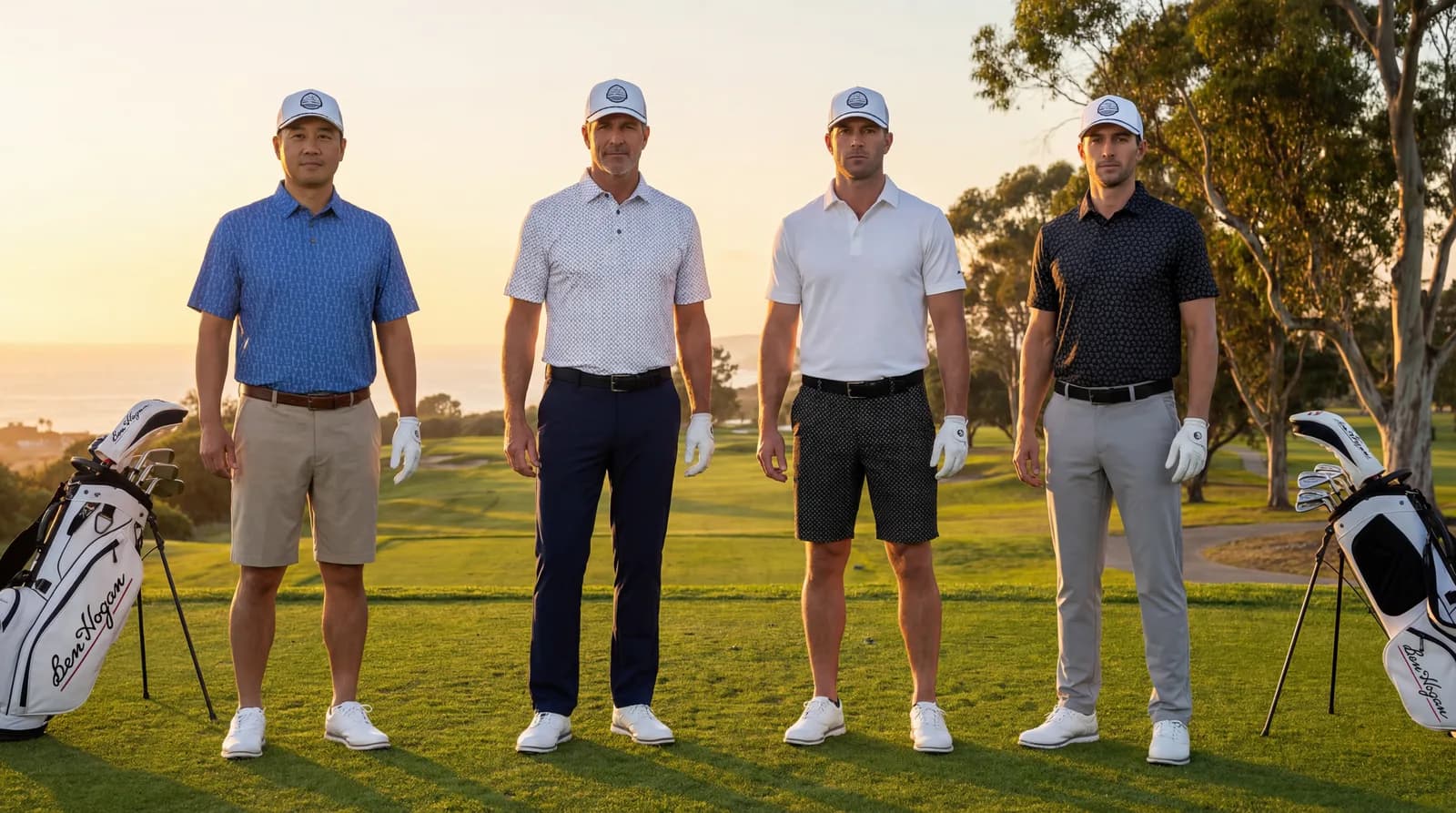
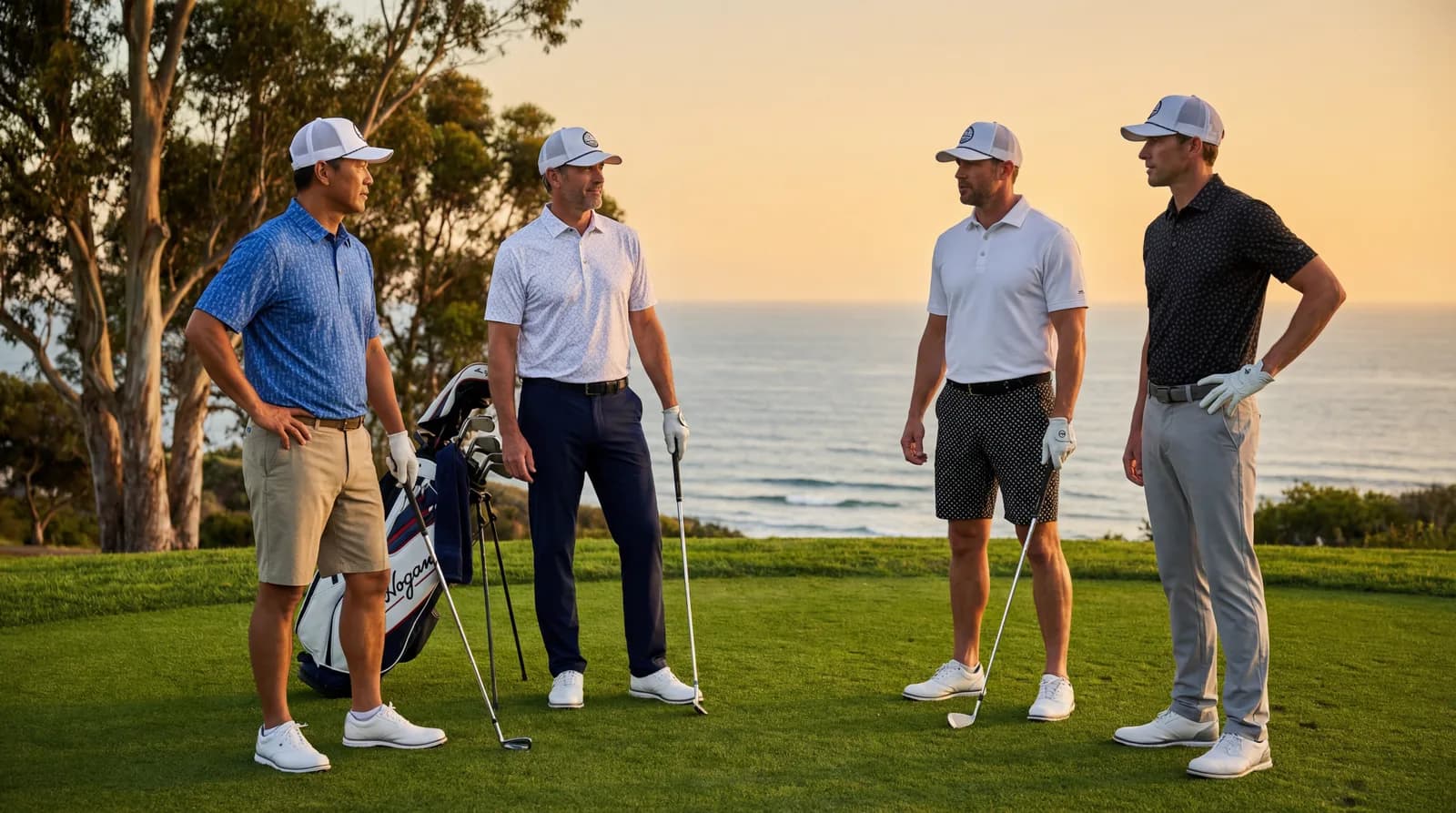
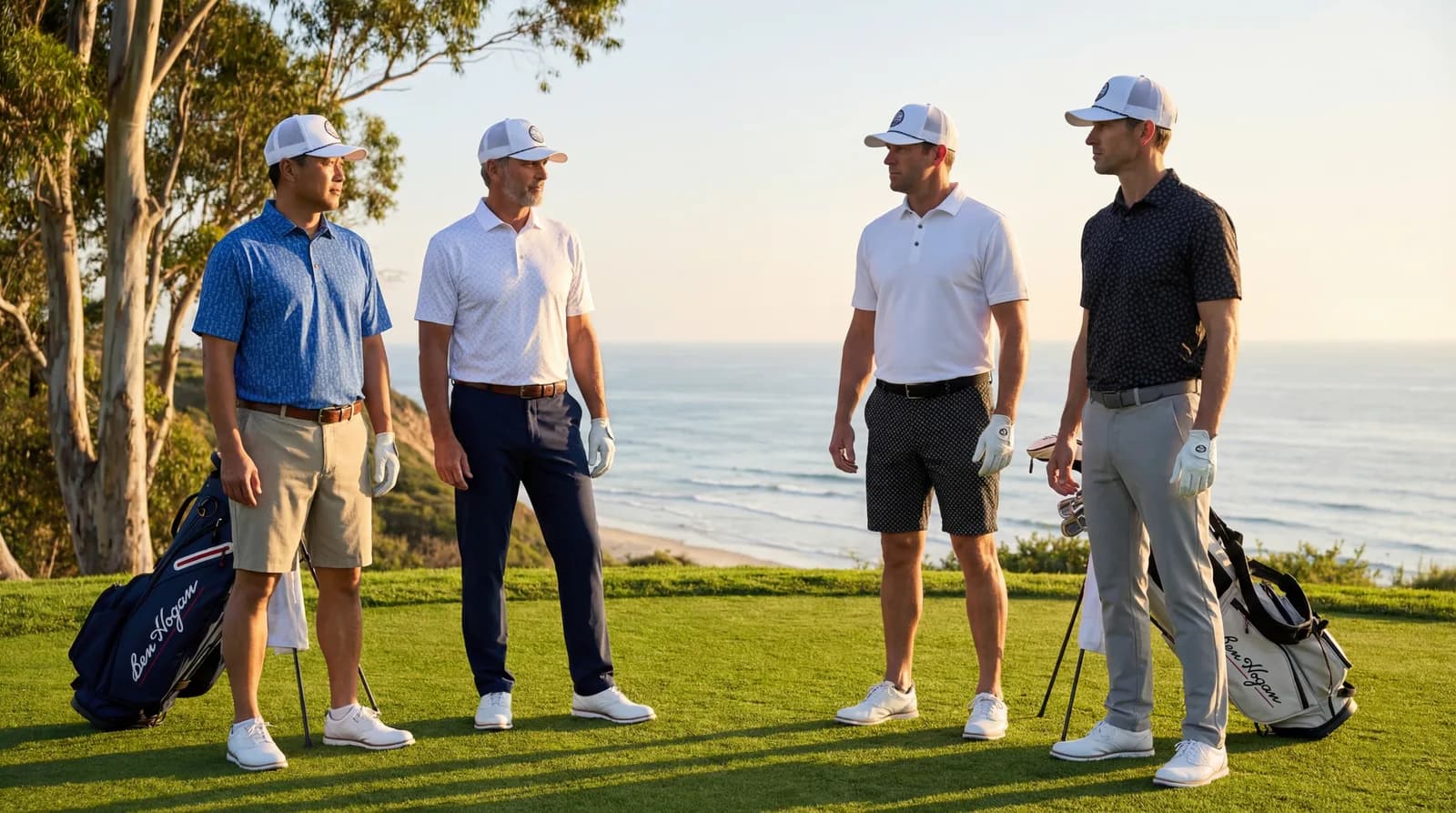
The honest result: AI carried the creative foundation. Coastal golf course setting, golden-hour lighting, realistic positioning and product placement — all production-ready straight out of the system.
Where it fell short was fine garment pattern detail on close crops. Pattern scale and distribution held; micro-detail precision did not survive brand-standard scrutiny. That is now a fixed stage of the workflow, not a surprise: AI for the foundation and the volume, human post-production for pattern, colour, and brand-guideline QA.
What's next
Move from a single-product validation to a full seasonal set, and add product-only packshot generation so PDP and campaign assets come out of one system.
Output samples for this engagement are held pending the client's written publication consent.
Failure modes and what changed
AI held scene composition and golden-hour lighting well, but fine garment pattern detail did not survive at brand-standard scrutiny on close crops.
Split the workflow into two explicit stages: AI for the creative foundation and volume, human post-production for pattern application, colour matching, and brand-guideline QA.
Pattern scale and distribution were plausible but micro-detail precision drifted between generations.
Locked the finishing step: post-production applies the brand-accurate pattern and colour to spec on every approved frame rather than trusting the model to hold it.
Operating evidence
Verified operating evidence for this engagement is not yet published.
Next expansion step
Move from a single-product validation to a full seasonal set, and add product-only packshot generation so PDP and campaign assets come out of one system.
Published with written permission from Founder direction — anonymized publication (2026-08-27) (2026-08-27). Permission record: Published anonymized on founder instruction. No client name, logo, or client-derived imagery. Client written marketing consent NOT yet on file — required before the engagement can be named or before any client product imagery is published. Tracked in docs/strategy/evidence-ledger.md..
Bring us your bottleneck
One recurring production task, your monthly volume, and the person who owns approval. You leave with a fit decision.
Book a strategy call